
Mastering how to read the Quran is an important step for Muslims who desire to enhance their relationship with the words of Allah. Nevertheless, a lot of adults are scared to start learning as they have not studied Arabic when they were children or have lost the knowledge they used to know. The positive thing is that it is never too late to start. Adults can develop their Quran reading skills step by step with patience, practice, and the help of an informed teacher. Noorani Qaida for adults offers a systematic beginning, which assists learners in becoming acquainted with Arabic letters, identifying the sounds of the vowels, and eventually gaining confidence in reading the Quran.
Why Adults Should Learn Noorani Qaida
Noorani Qaida assists learners in learning the basics of Quranic reading and then proceeding to learn entire surahs. Instead of memorizing words without knowing the sounds of letters, students learn to work with Arabic letters and how their pronunciation influences recitation.
In the case of adults, this basis can streamline the process of Quran learning and make it less daunting. It particularly comes in handy when one would like to rectify long-term pronunciation errors or when one has been out of school for many years and wants to resume education.
Learning Noorani Qaida can help adults:
- Recognise Arabic letters in their different forms.
- Understand short vowels and other basic reading signs.
- Improve pronunciation with guidance from a qualified teacher.
- Develop a stronger foundation for learning Quran recitation with Tajweed.
- Build a consistent habit of Quran study alongside daily responsibilities.
The aim is not to rush through the lessons but to develop accuracy and confidence gradually.
Can Adults Learn Noorani Qaida from Scratch?
Yes. Adults can begin learning Noorani Qaida without any previous knowledge of Arabic. An effective teacher begins with the fundamentals, clarifies new sounds, and gives the students time to practice before proceeding.
An organized Noorani Qaida online course can be of great use, especially to a working adult with family and religious studies. The lesson may be based on the ability of the student instead of assuming that they are already conversant with the Arabic alphabet.
Beginners usually progress through several stages:
- Recognizing and naming Arabic letters.
- Learning the correct sounds of individual letters.
- Understanding vowel marks and how they change pronunciation.
- Reading letters joined together.
- Practicing simple combinations before progressing to more complex reading exercises.
There are learners who pass through the initial lessons fast, and those who require more repetition. Both methods are normal. The most important thing is to have a strong base rather than rush forward without understanding the fundamentals.
Learning Arabic Letters and Correct Pronunciation
The first step is to get acquainted with the Arabic alphabet. There might be some similarities in some letters, especially for a person who is viewing Arabic for the first time. Their dots, shapes, and positions are distinguishing, and so learners require time to identify them correctly.
Pronunciation is also to be paid special attention. Certain Arabic sounds do not have exact equivalents in English or other commonly spoken languages. Reading a letter as it looks may thus be a source of errors.
A teacher is able to show how to make each sound and assist students in observing the differences between the letters that look or sound similar. This stage is more effective with listening attentively, repeating the sounds, and getting personal feedback.
Adults are not supposed to be embarrassed about repeating the same question. Pronunciation is corrected through practice and learning at a pace that is comfortable is much more important than faking some knowledge of a sound that is still challenging.
Understanding Harakat and Basic Reading Rules
Once learners recognise the letters, they begin studying the signs that tell them how to pronounce those letters. These include the basic vowel marks, commonly known as Harakat.
The three short vowels – Fatha, Kasra, and Damma-produce different sounds. Students also learn Sukoon, which indicates that a consonant is not followed by a short vowel, and Tanween, which introduces additional ending sounds.
As lessons progress, learners practise:
- Reading letters with individual vowel marks.
- Combining letters to form readable sequences.
- Recognizing Sukoon and Tanween in simple exercises.
- Understanding Shaddah, which indicates a doubled consonant.
- Applying basic reading rules with a teacher’s guidance.
The lessons might be small, but they form habits that will encourage proper reading of the Quran. Instead of memorizing the definitions, the students should concentrate on knowing each rule and listening to its proper usage.
Common Challenges Adults Face When Learning Qaida
Adults usually bring motivation and life experience to learning the Quran, and they might have difficulties that demand patience. The demands of work, family, and limited time to study may make it hard to have a routine.
Other learners are also afraid to make a mistake or feel awkward learning something they feel they ought to know. Such emotions are quite reasonable, yet they are not a cause to delay learning.
Common challenges include:
- Difficulty recognizing similar letters: Regular reading exercises and teacher feedback can help distinguish them.
- Pronunciation mistakes: Listening carefully and repeating difficult sounds helps develop accuracy.
- Limited practice time: Short, consistent sessions are often easier to maintain than occasional long lessons.
- Fear of making mistakes: A supportive learning environment allows students to ask questions and improve without embarrassment.
Remember that every learner starts somewhere. Sincere effort, patience, and consistency are essential parts of the learning process.
Tips for Practicing Noorani Qaida at Home
What you practise between lessons can make a real difference to your progress. Even when you have only a little time available, a simple routine can help you retain what your teacher has taught you.
Try these practical habits:
- Set aside a regular time: Choose a time that fits comfortably into your daily routine.
- Revise previous lessons: Review familiar letters and rules before beginning new material.
- Read aloud: This helps you notice sounds that may be difficult to recognise when reading silently.
- Listen to correct recitation: Pay attention to pronunciation and ask your teacher about sounds you find challenging.
- Keep track of difficult lessons: Note the letters or rules that need extra practice and revisit them regularly.
Avoid rushing through several lessons just to finish the book quickly. Understanding a small section properly is more useful than moving ahead while remaining unsure about earlier material.
If you want to strengthen your broader Islamic knowledge alongside Quran reading, exploring an online Islamic courses option can help you identify additional areas of study that interest you.
Benefits of Learning Noorani Qaida Online
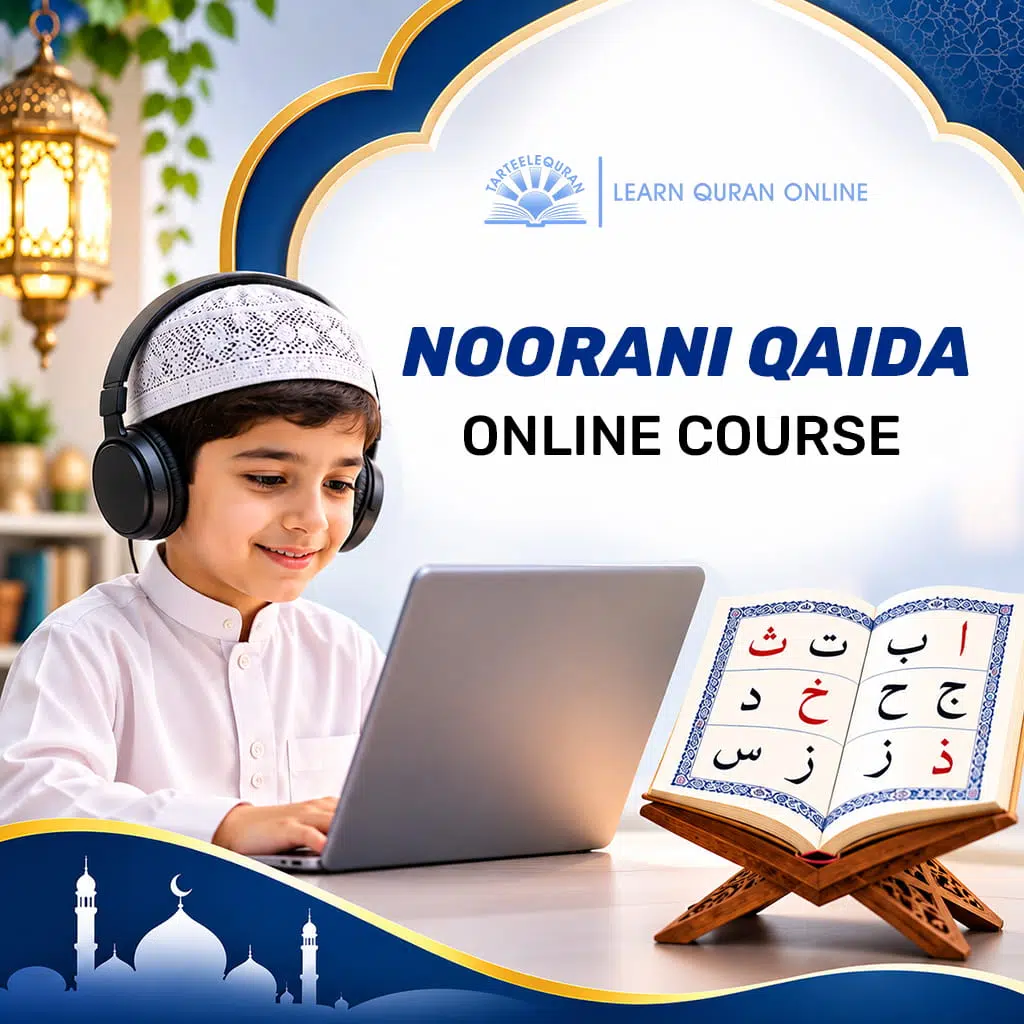
Home-based learning can help to make Quran education more accessible, especially to adults who could not attend physical classes regularly. A Qaida Noorania online learning option allows students to receive guidance without adding travel time to an already busy schedule.
In selecting online lessons, seek a setup that provides you with time to read out loud, ask questions, and get corrections instead of merely watching tapes of explanations.
The main advantages may include:
- Flexible lesson scheduling around work and family commitments.
- Individual attention suited to your reading level.
- Opportunities to practise pronunciation with a teacher.
- A comfortable learning environment for adult beginners.
- Continued guidance as you progress through the lessons.
It is the quality of teaching that is important rather than the form. Online classes are most effective when students are actively involved, practice frequently, and get constructive feedback.
You can also consider taking a daily dua learning course online as your learning progresses to reinforce your knowledge of everyday supplications and their meanings.
How to Choose the Right Noorani Qaida Course
Not all courses will be suitable to all of the learners. Prior to enrollment, you need to think about the manner in which the lessons are delivered, whether the instructor is able to evaluate your present capability, and whether the schedule fits into your routine.
Look for a course that offers:
- Qualified Quran teachers: Choose teachers who can explain Arabic pronunciation clearly and correct mistakes.
- Beginner-friendly instruction: Lessons should start at your level, even if you have no previous experience.
- Individual feedback: You should have opportunities to read aloud and receive corrections.
- A structured learning plan: The lessons should progress logically from letters to basic reading rules.
- A suitable schedule: Consistency becomes easier when class times fit your daily responsibilities.
Although Noorani Qaida for kids and adult courses teaches many of the same underlying principles, the adult may need a more gradual and detailed explanation of the material. Select a course that takes into consideration your experience, addresses your queries, and provides you with time to practise.
Inquire about the teaching method, the lesson plan, and a trial lesson before enrolling. This information will assist you in determining whether the course is as good as you expect it to be.
Begin Your Quran Reading Journey with TarteeleQuran
Learning Noorani Qaida is a good initial step to reading the Quran with more confidence and precision. You need not know Arabic in advance, and you need not learn it all at the same time. Begin with the letters, drill in the elementary rules, and allow yourself time to perfect under due instructions.
TarteeleQuran offers Quran learning opportunities for students at different stages of their journey. If you are ready to begin, explore its Noorani Qaida course to learn more about the available lessons.
Do not let uncertainty or a busy schedule keep you from taking this meaningful step. Visit TarteeleQuran today, explore your learning options, and take the first step towards reading the Quran with confidence.